PrestaShop Integration with Google Merchant Centre (Version Pro)

PP-M024P
Integrations & API
1.7.6.x + | 8.x | 9.x
EN, FR, IT, DE, PL
  • 1.0.3
  • 2026-03-19
  • Product Feed PRO streamlines catalogue publishing between your store and advertising platforms. It is practical for e-commerce teams that need faster time-to-market for new products while reducing data errors.

    Admins gain operational control, developers get stable integration logic, and SEO specialists receive a cleaner, structured product-data layer for paid channels.

    Price available only until: 10.05.2026

    68.61 € Tax excluded
    89.10 €
    Save 23%
    Lowest price within 30 days before promotion: 59.70 €

    Enter your store domain

    event Important: Domain change possibility expand_more

    If the module will be tested, enter a test domain during purchase.

    You will report the change to a production domain later.

    In case of an incorrectly entered domain, please contact us as well.

    Changing the domain to a production one is possible once and requires reporting within 3 days of starting its use.

    Reports: shop@prestapremium.com

    In the content, provide:

    • order number
    • product name
    • current domain
    • new domain

    Details

    Additional services:

    Installation +29.10 €

    Store Administration Back office demo

    Information Parameters:

    • 1.0.3
    • 2026-03-19
    • 1.7.6.x + | 8.x | 9.x
    • EN, FR, IT, DE, PL
    • demo.admin.shop

    Najważniejsze korzyści

    • Szybsza publikacja oferty w kanałach reklamowych — jeden moduł zasila Google Merchant Center i Meta Catalog bez osobnych procesów eksportu.
    • Lepsza kontrola asortymentu — tryby AUTO i MANUAL pozwalają decydować, czy eksport obejmuje całość oferty, czy wybrane SKU.
    • Wyższa jakość danych produktowych — mapowanie kategorii Google i konfiguracja identyfikatorów ograniczają ryzyko odrzuceń feedu.
    • Mniejszy koszt operacyjny zespołu — harmonogram CRON i cache feedu redukują liczbę ręcznych interwencji administracyjnych.
    • Gotowość do skalowania sprzedaży — wiele feedów per rynek, język i walutę wspiera ekspansję cross-border.

    Zastosowania modułu

    Sklep jednorynkowy z kampaniami PLA

    Jeden feed dla Google Shopping, regularna regeneracja przez CRON i szybkie odświeżanie po zmianach cen.

    Sklep multistore lub cross-border

    Osobne feedy dla języków i walut (np. PL-PLN, DE-EUR), z niezależnymi filtrami kategorii i producentów.

    Asortyment sezonowy lub selektywna sprzedaż

    Tryb MANUAL umożliwia eksport tylko produktów promowanych, a tryb AUTO utrzymuje pełną synchronizację katalogu.

    Sklepy z dużą liczbą wariantów

    Eksport kombinacji jako osobnych pozycji poprawia reprezentację rozmiarów i kolorów w kanałach reklamowych.

    Funkcjonalności – Back Office

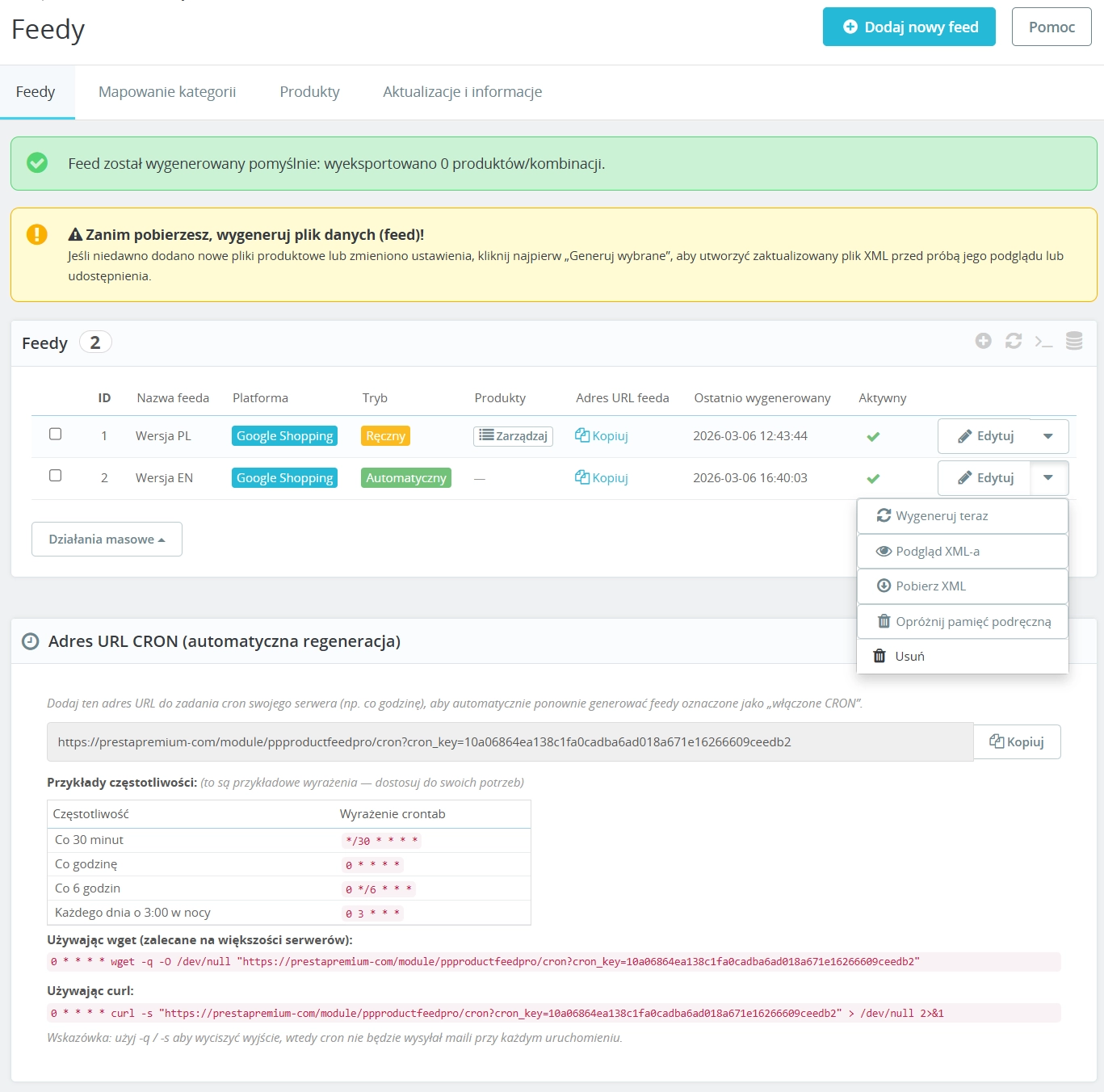
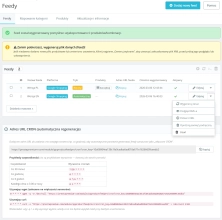
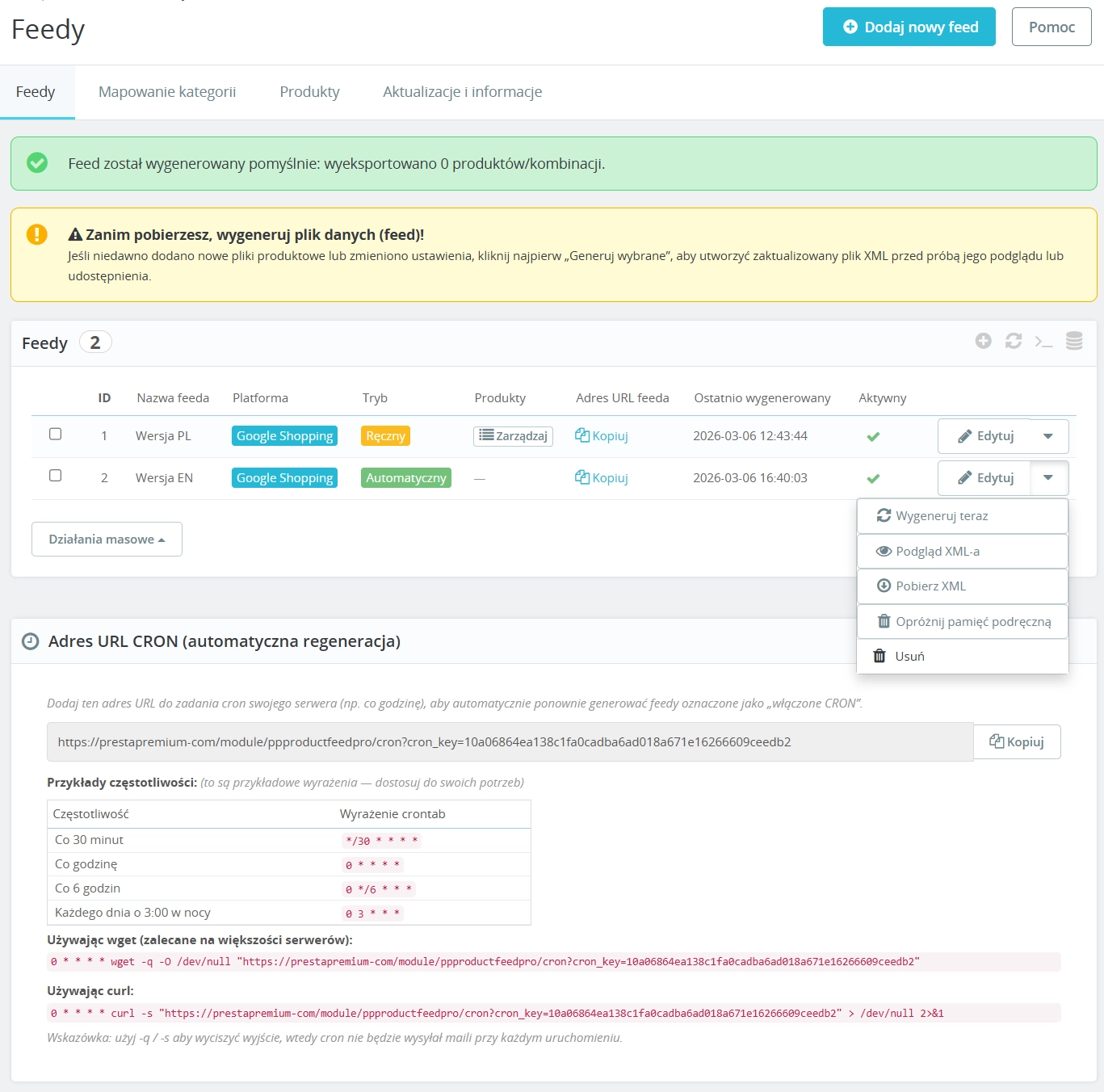
    1. Zarządzanie wieloma feedami

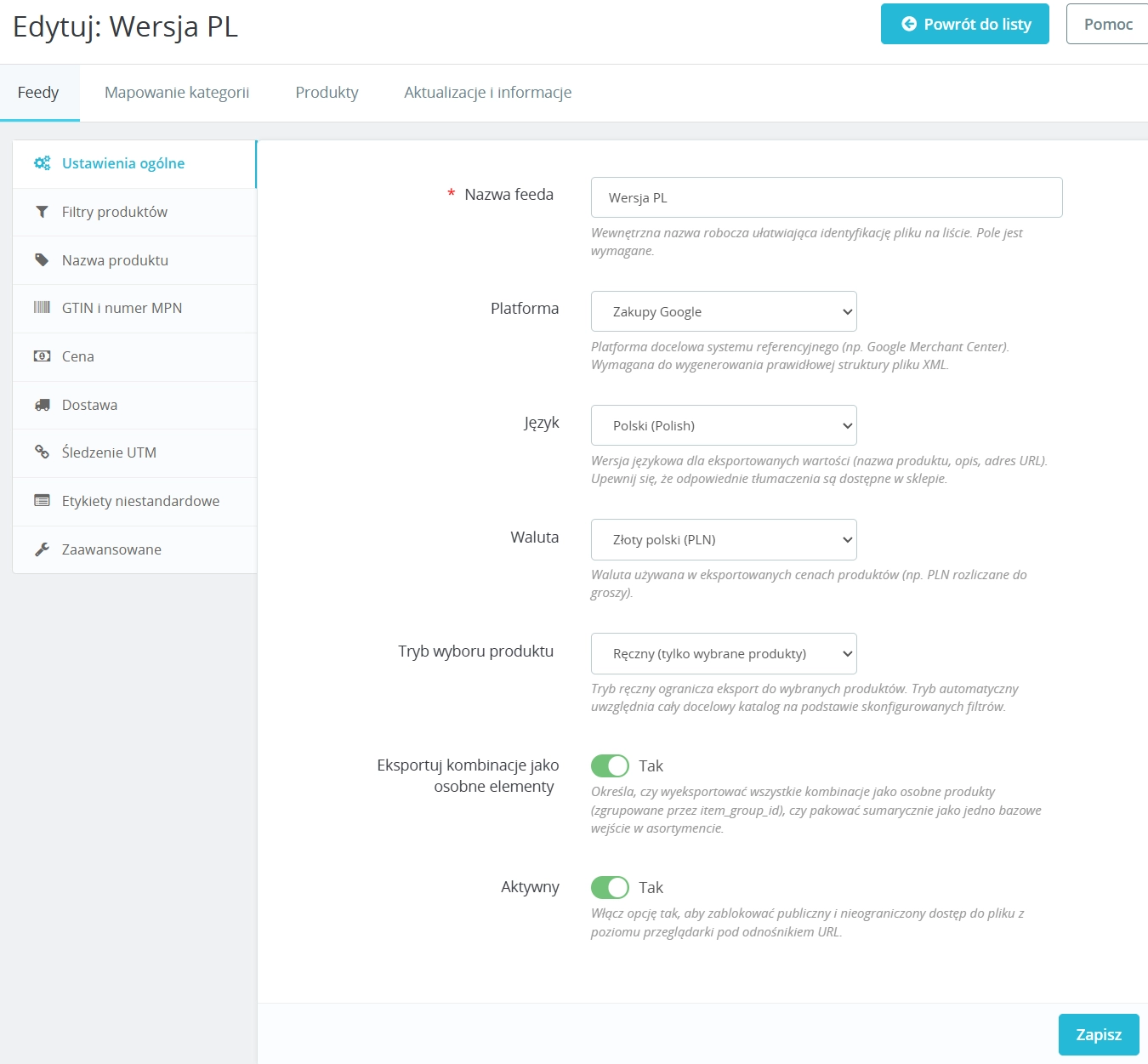
    Tworzysz niezależne feedy dla różnych platform i rynków, bez konfliktu ustawień.

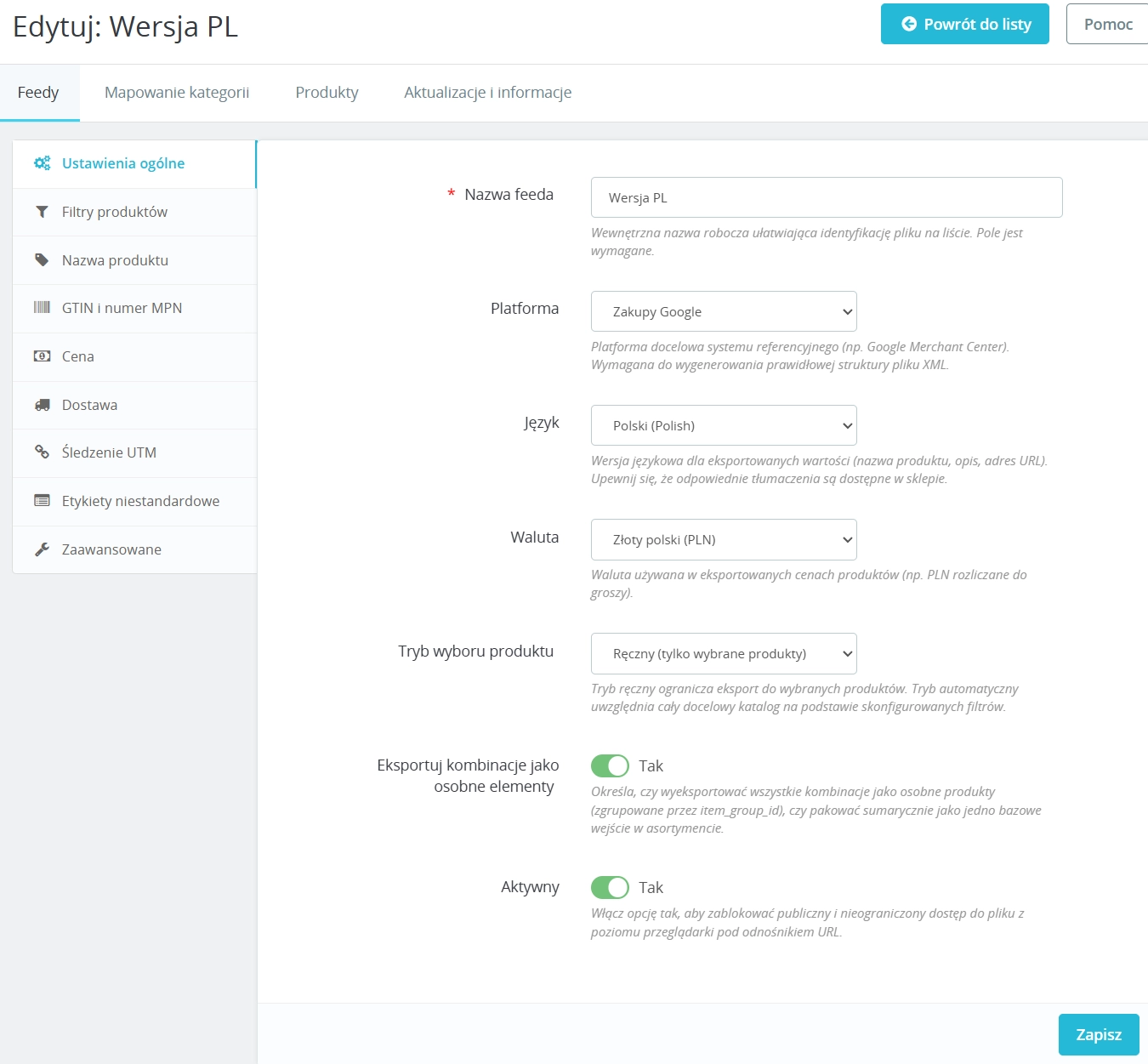
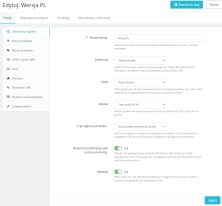
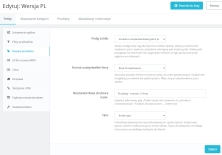
    • Platforma feedu — Google Shopping lub Facebook/Meta Catalog.
    • Język i waluta — dedykowana konfiguracja dla konkretnego rynku.
    • Status aktywności — szybkie włączanie i wyłączanie feedów.

    2. Tryb AUTO/MANUAL i selekcja produktów

    Decydujesz, czy eksport ma być automatyczny czy kontrolowany ręcznie.

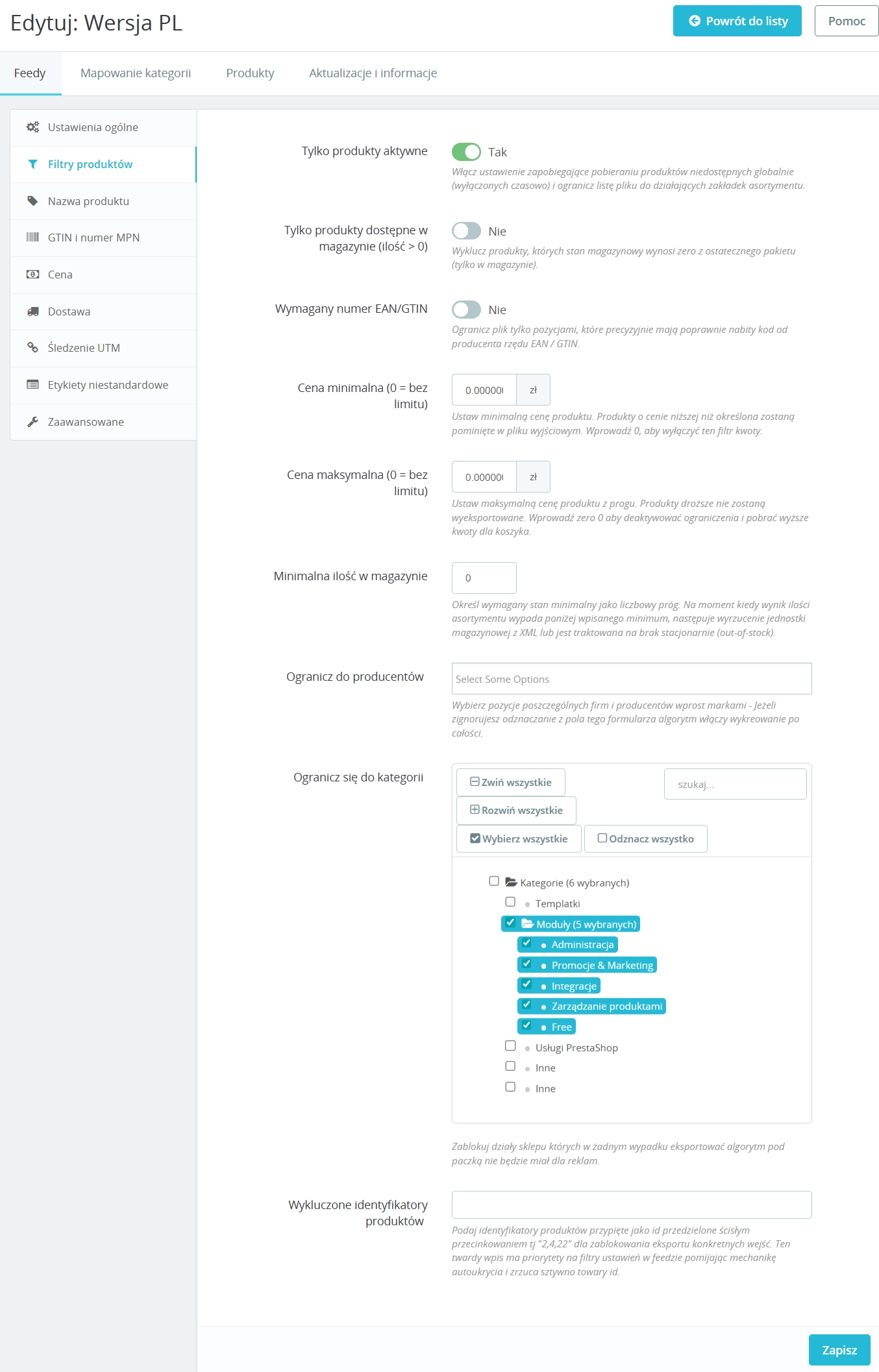
    • Tryb automatyczny — moduł eksportuje produkty zgodnie z konfiguracją feedu i ustawionymi filtrami.
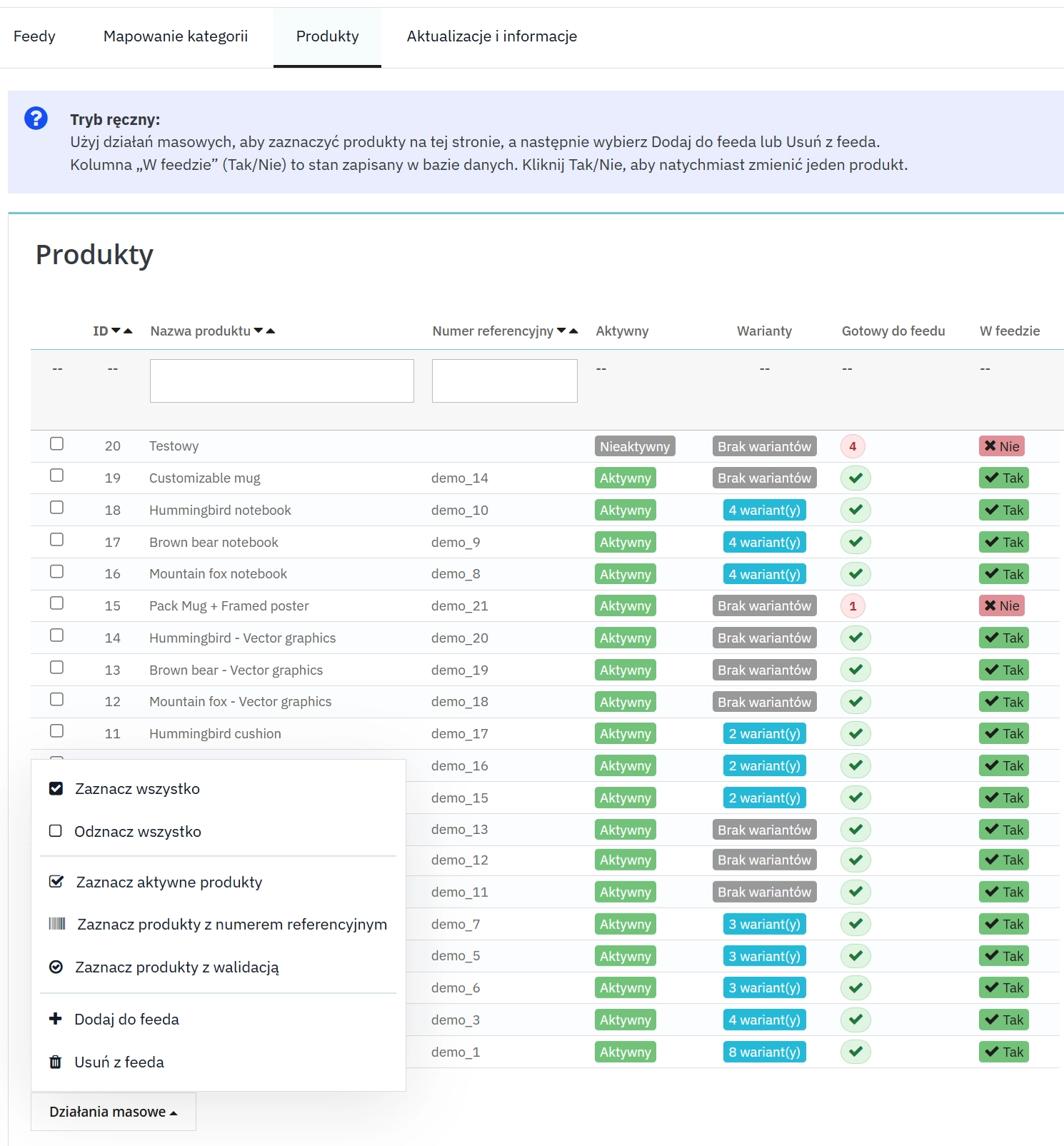
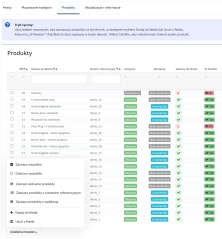
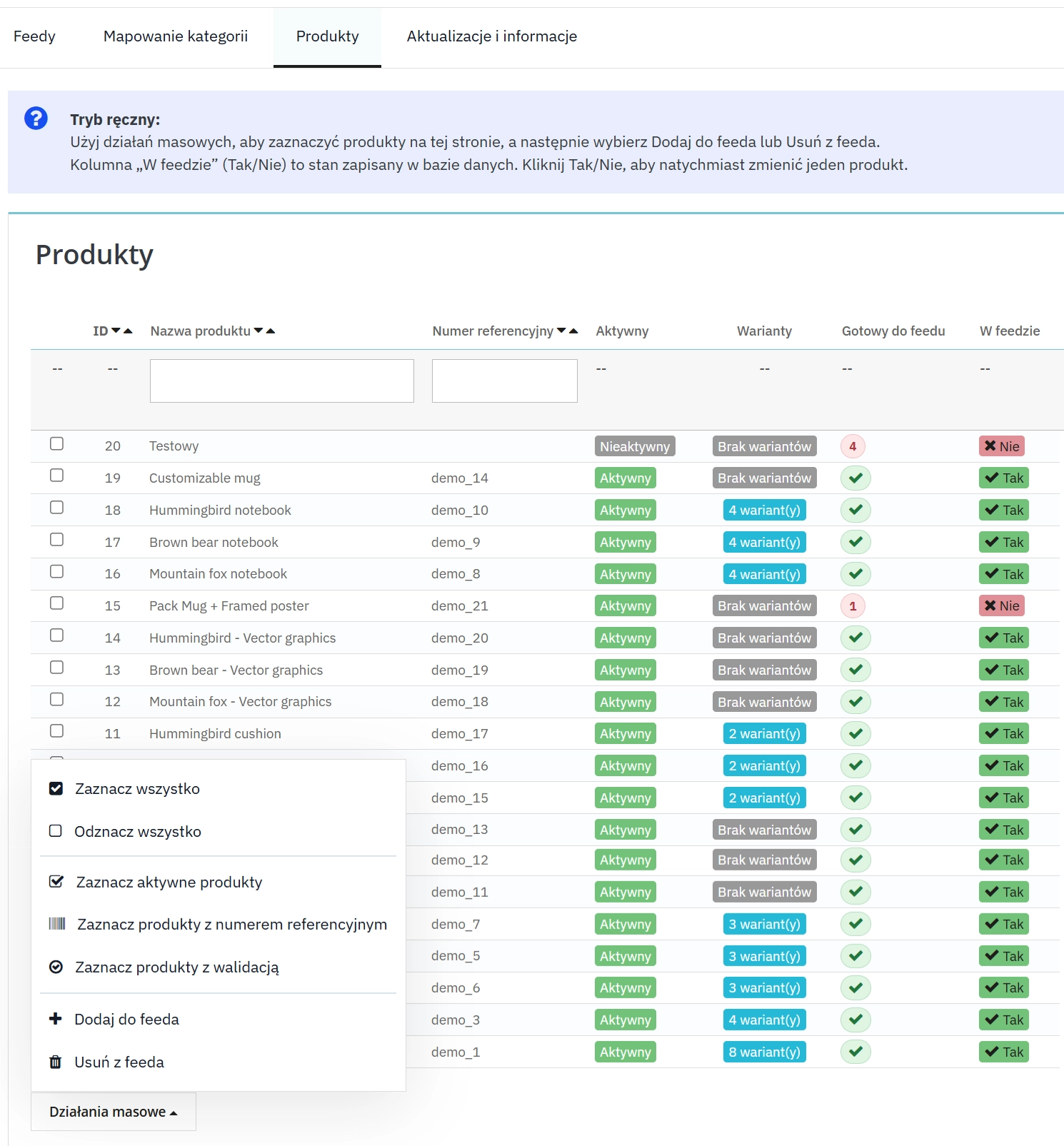
    • Tryb ręczny — wybierasz, które produkty mają zostać dopisane do konkretnego feedu w zakładce Produkty.
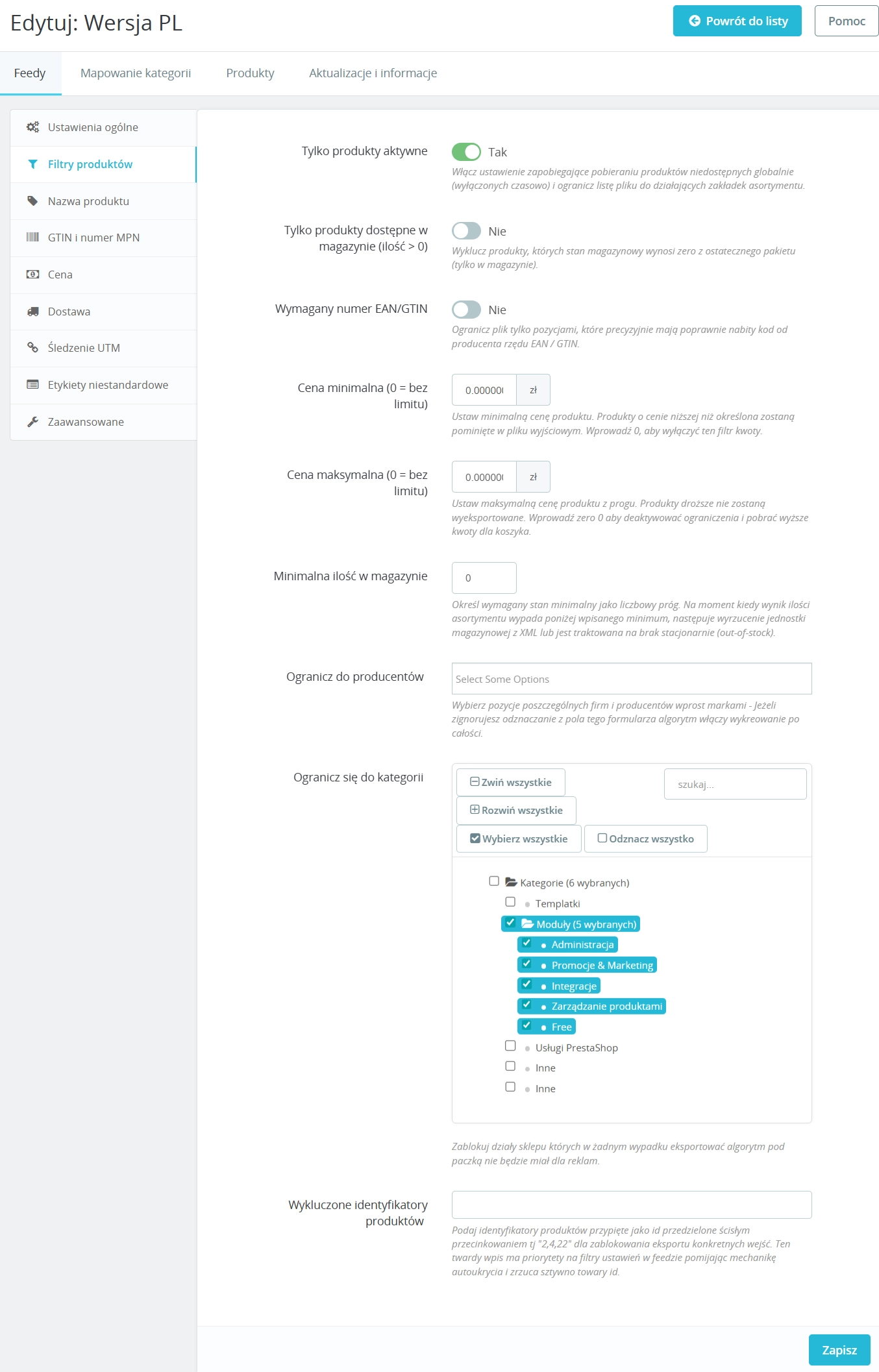
    • Filtry eksportu — kategorie, producenci, zakres cen, dostępność i identyfikatory pomagają ograniczyć feed do właściwego asortymentu.
    • Ocena gotowości produktu do feedu — lista produktów pokazuje, czy pozycja spełnia podstawowe warunki jakościowe potrzebne do poprawnego eksportu.
    • Wygodniejsze działania ręczne — szybkie przełączanie statusu i akcje zbiorcze ułatwiają aktywację eksportu dla wielu produktów jednocześnie.

    3. Jakość danych produktowych i dopasowanie

    Konfigurujesz elementy wpływające na akceptację feedu i jakość ruchu produktowego.

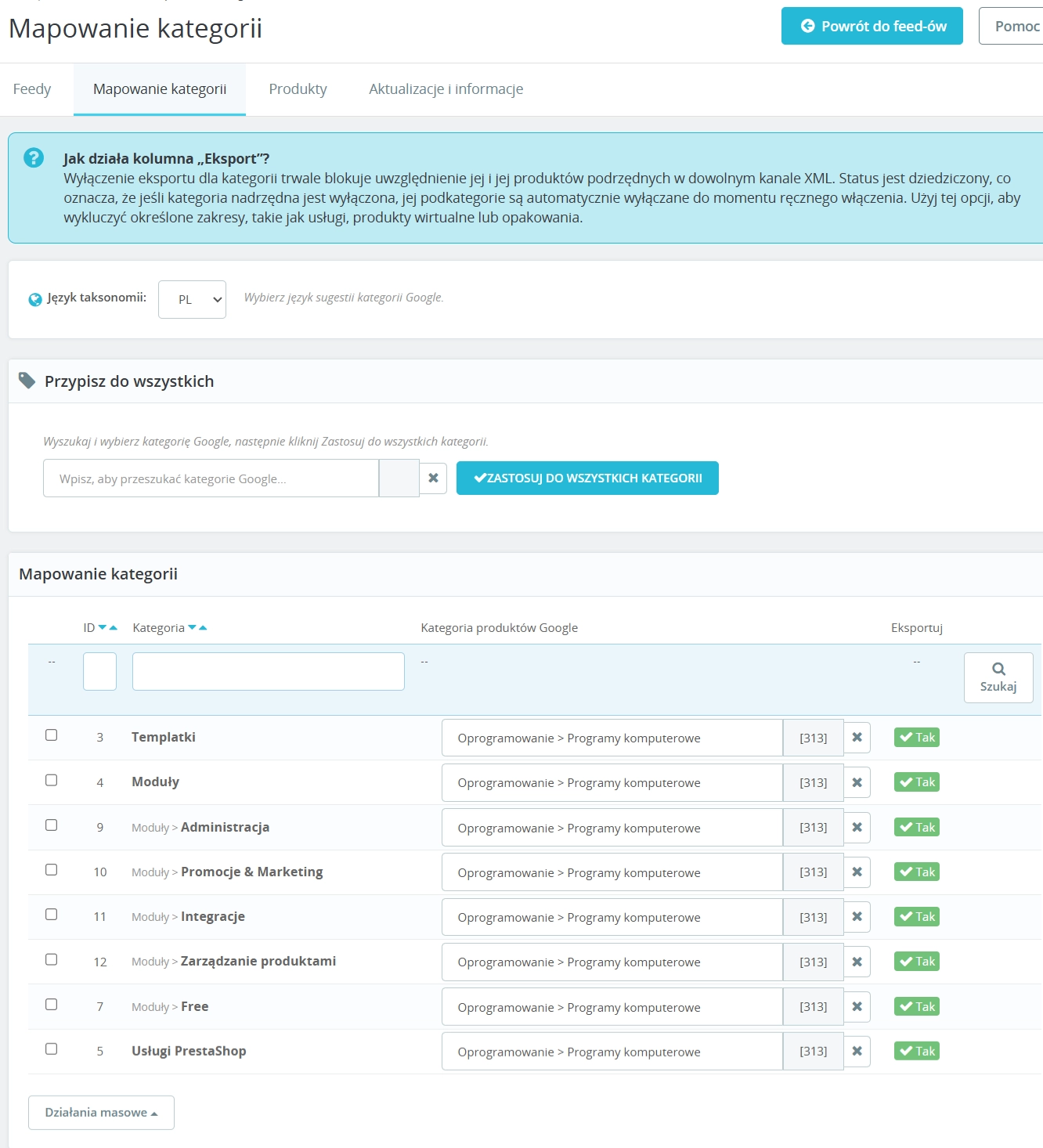
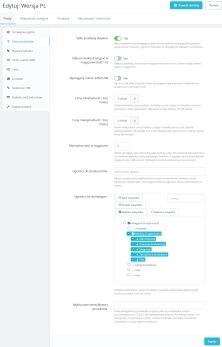
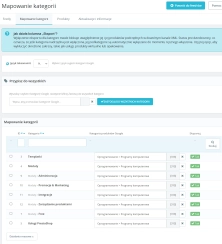
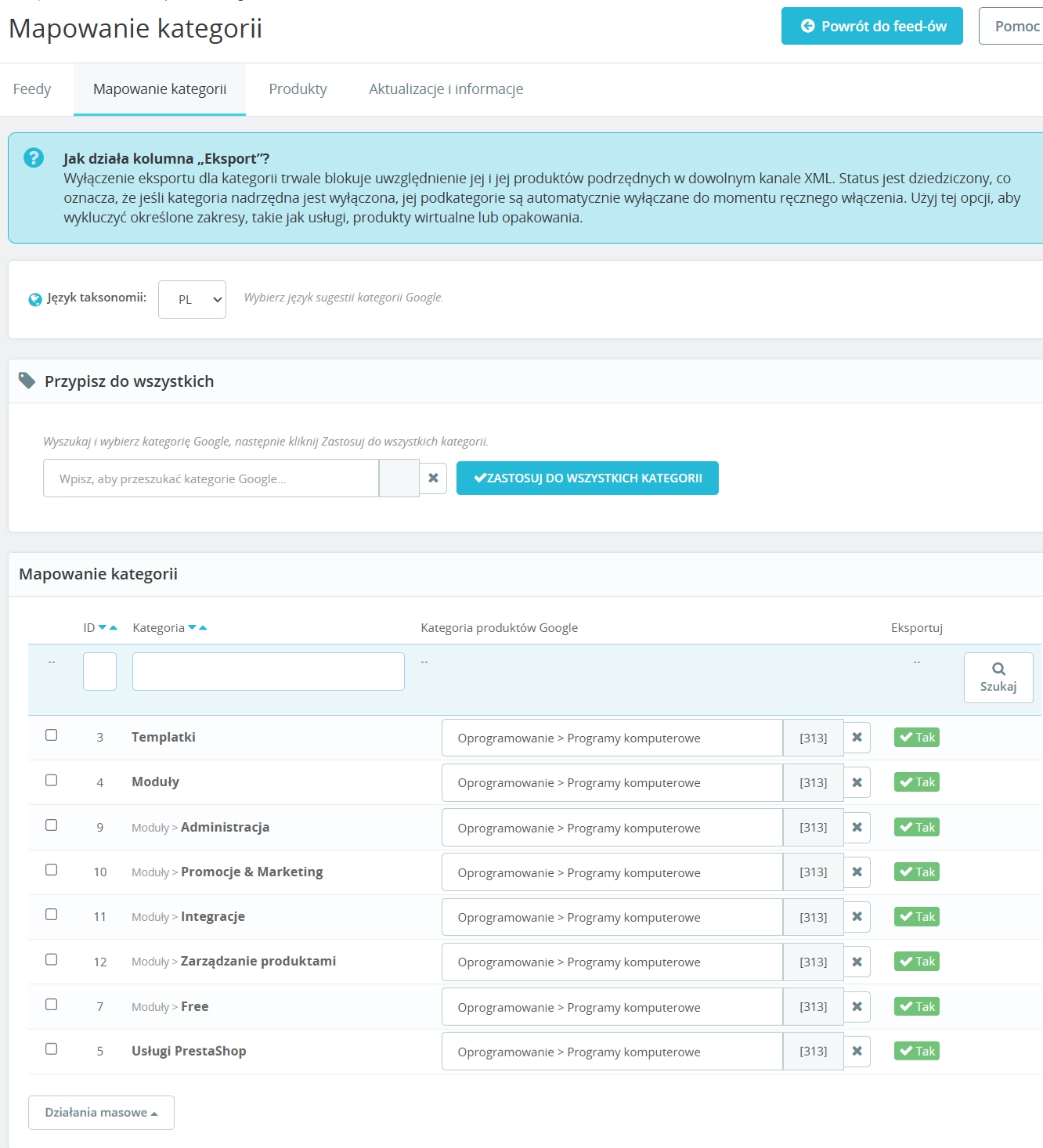
    • Category Mapping — mapowanie kategorii sklepu do Google Product Category.
    • Szybkie przypisanie do wszystkich kategorii — jedno działanie pozwala nadać tę samą kategorię Google całej strukturze sklepu, co przyspiesza start wdrożenia i porządkowanie dużych katalogów.
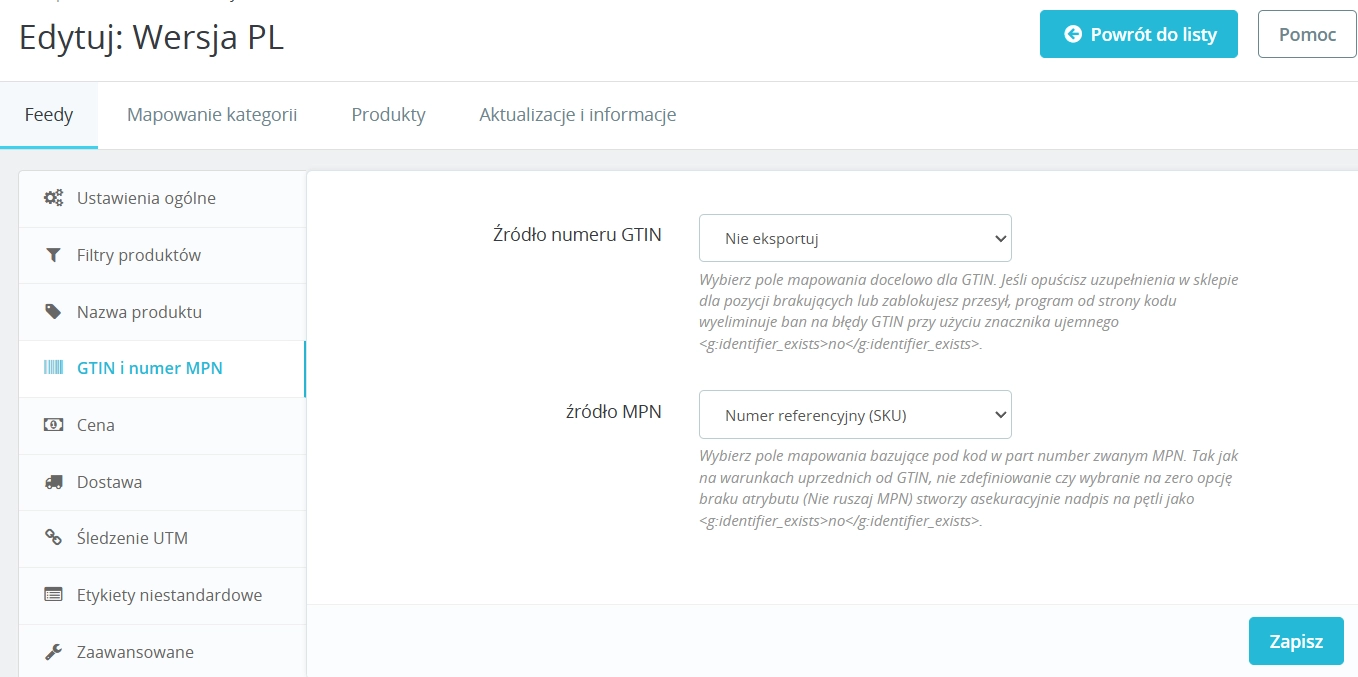
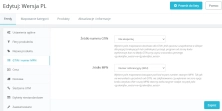
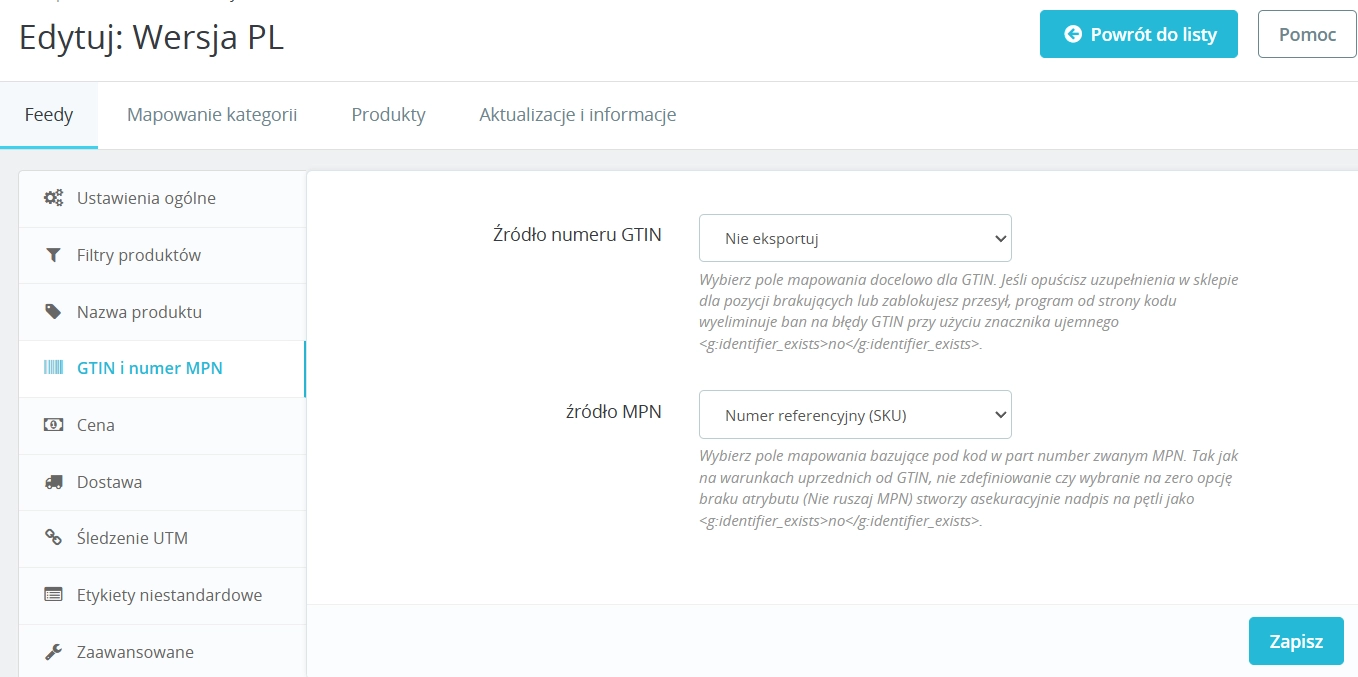
    • Identyfikatory — kontrola źródła GTIN (EAN, UPC, ISBN, SKU) i MPN.
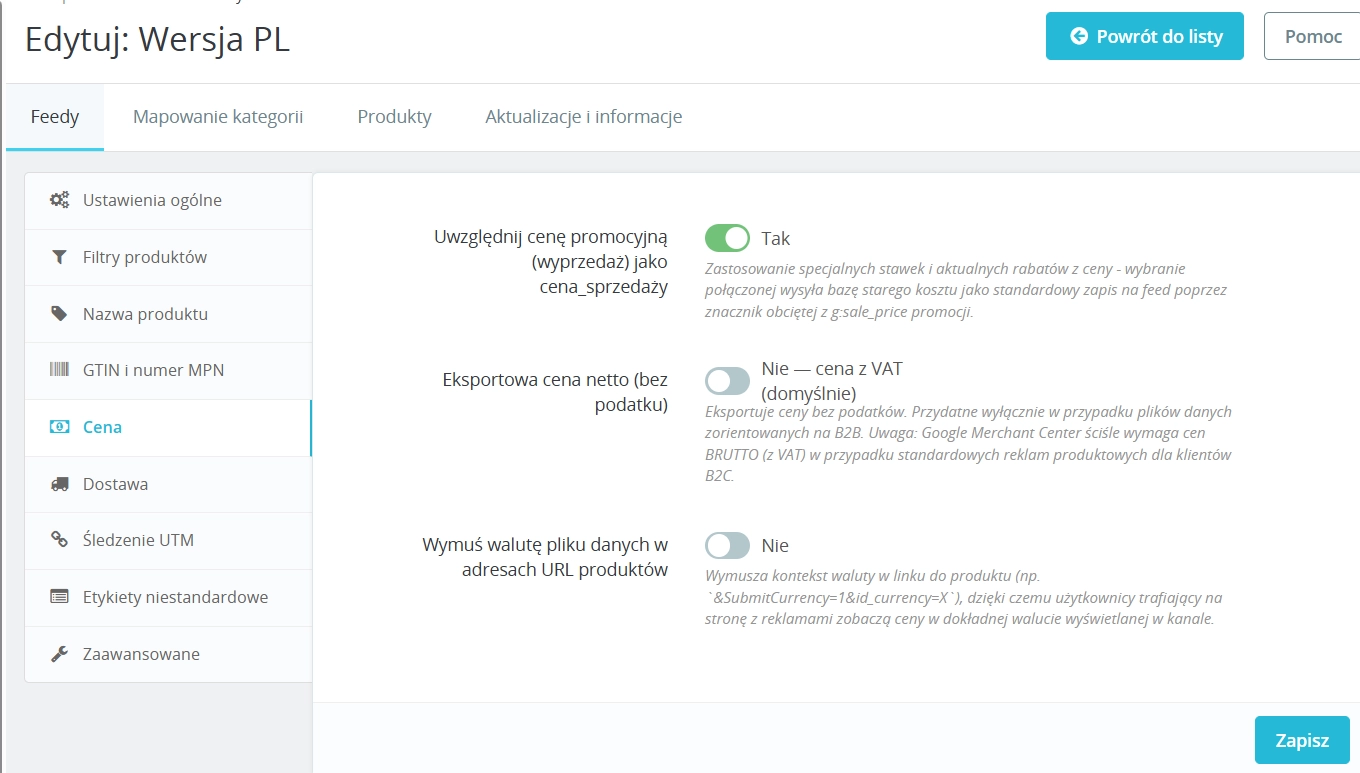
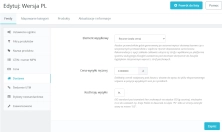
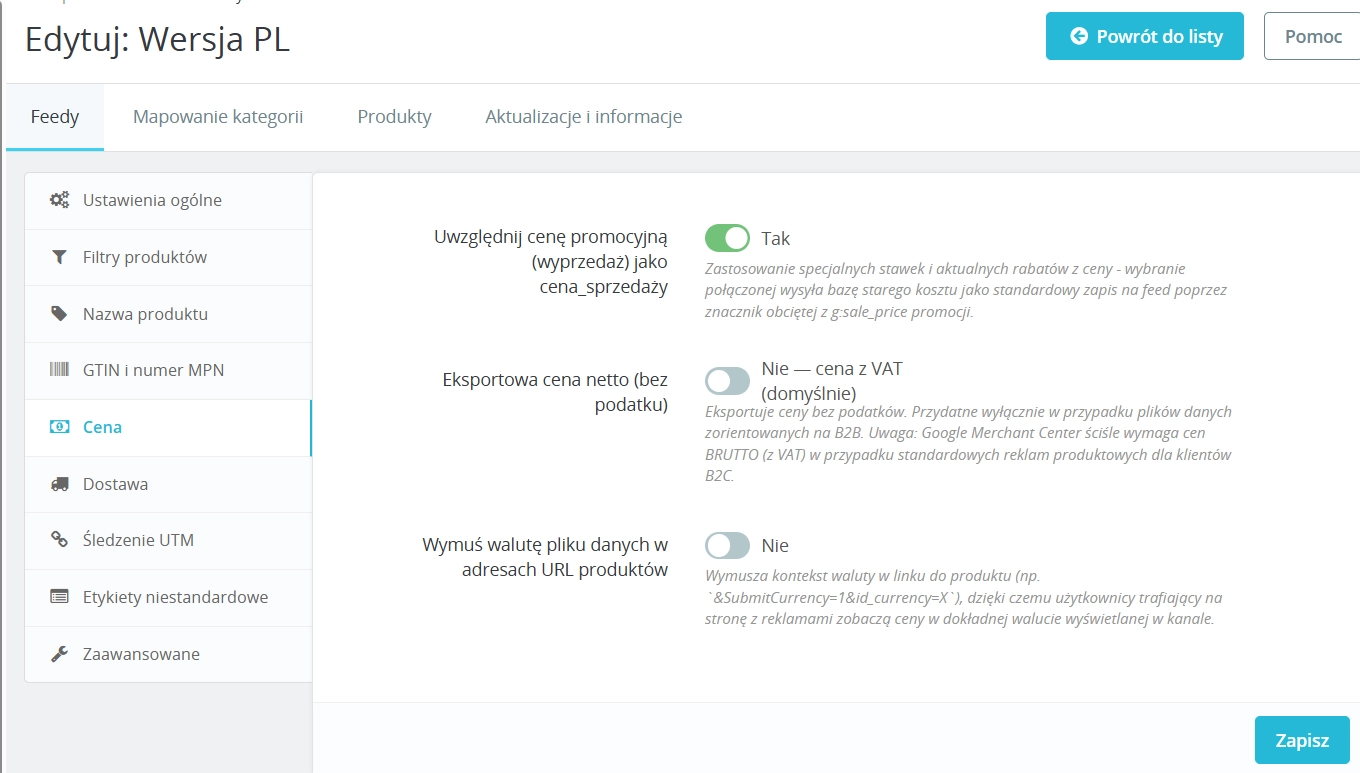
    • Cena i promocja — wybór netto/brutto, wymuszanie waluty oraz eksport ceny promocyjnej.
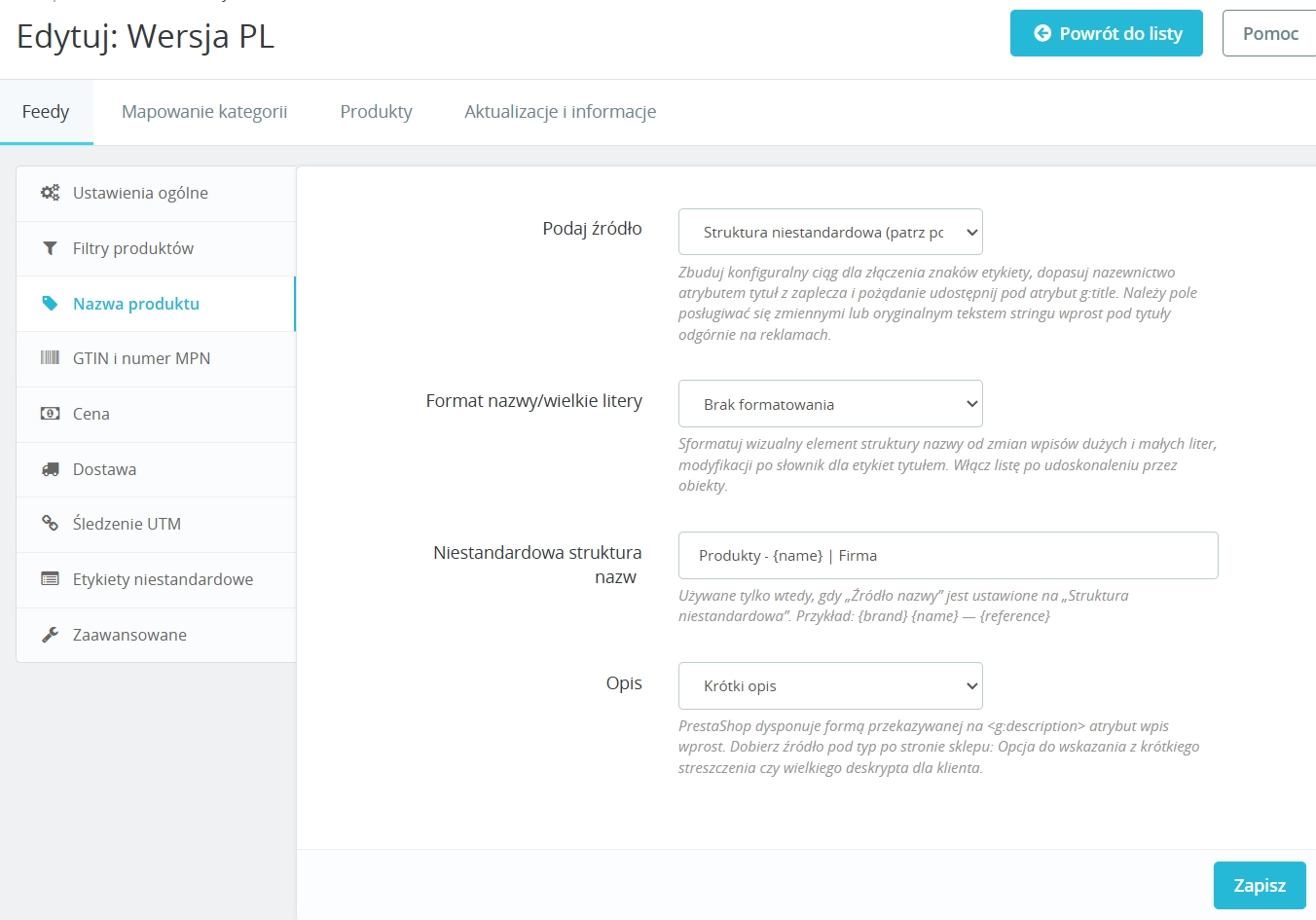
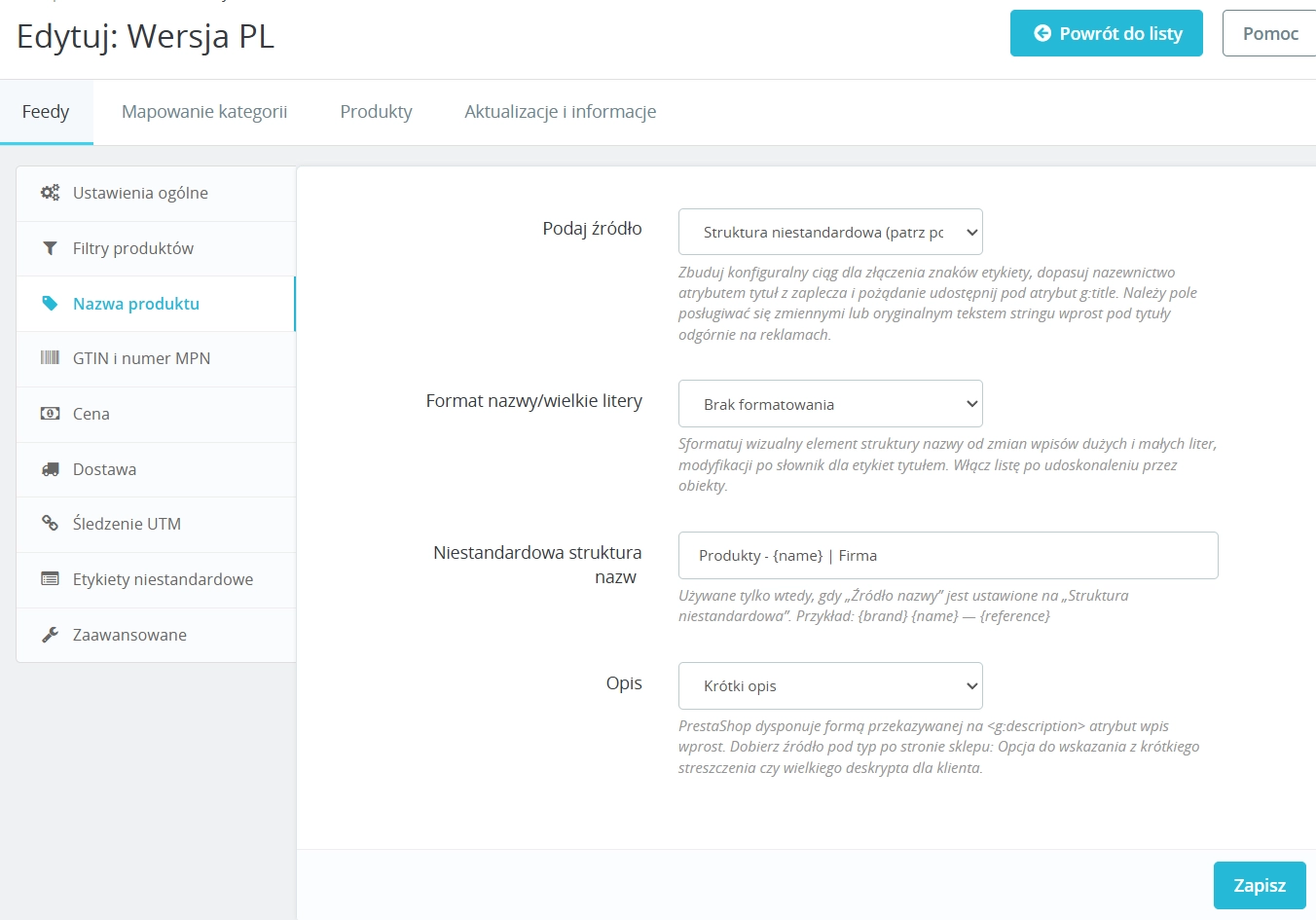
    • Nazwy produktów — formatowanie (np. wielkie litery, prefix marki) i niestandardowa struktura z placeholderami.

    4. Optymalizacja kampanii (PMax / Shopping)

    Moduł posiada wbudowane narzędzia dla marketerów zarządzających kampaniami reklamowymi.

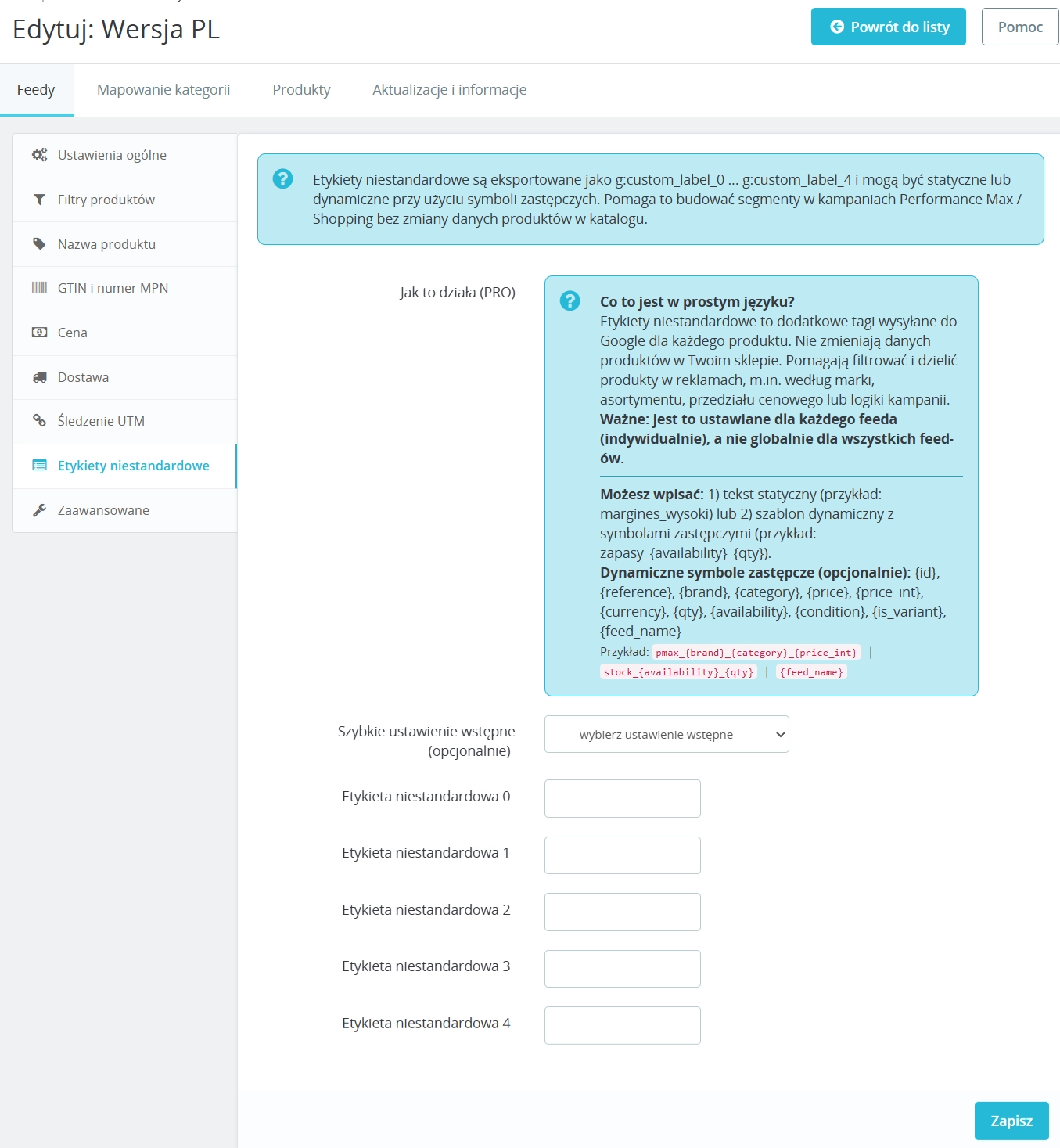
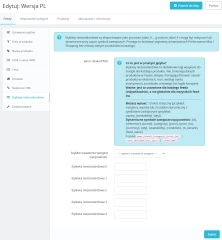
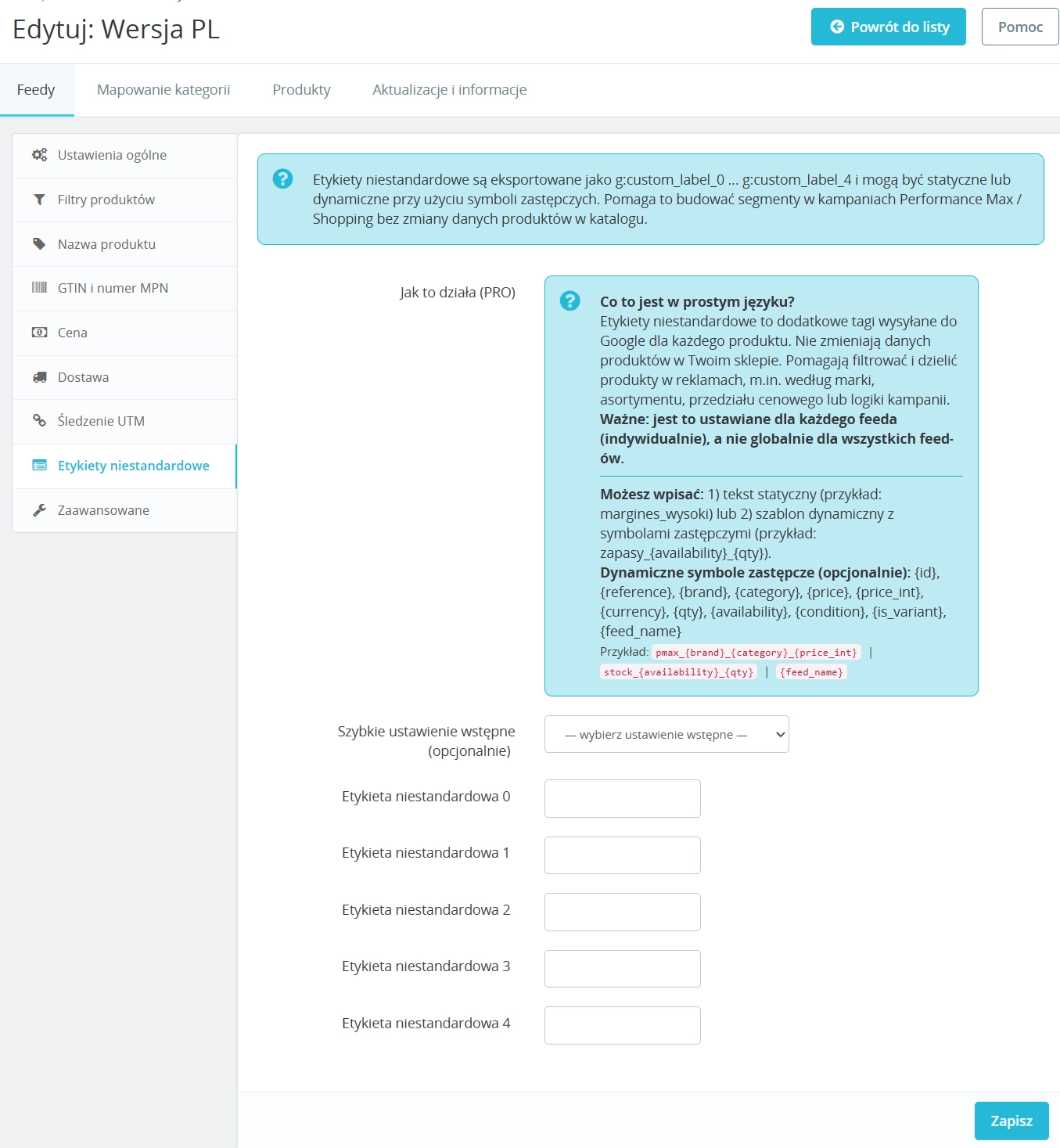
    • Custom labels — dynamiczne etykiety własne z obsługą zmiennych i presetami (np. dla segmentacji PMax).
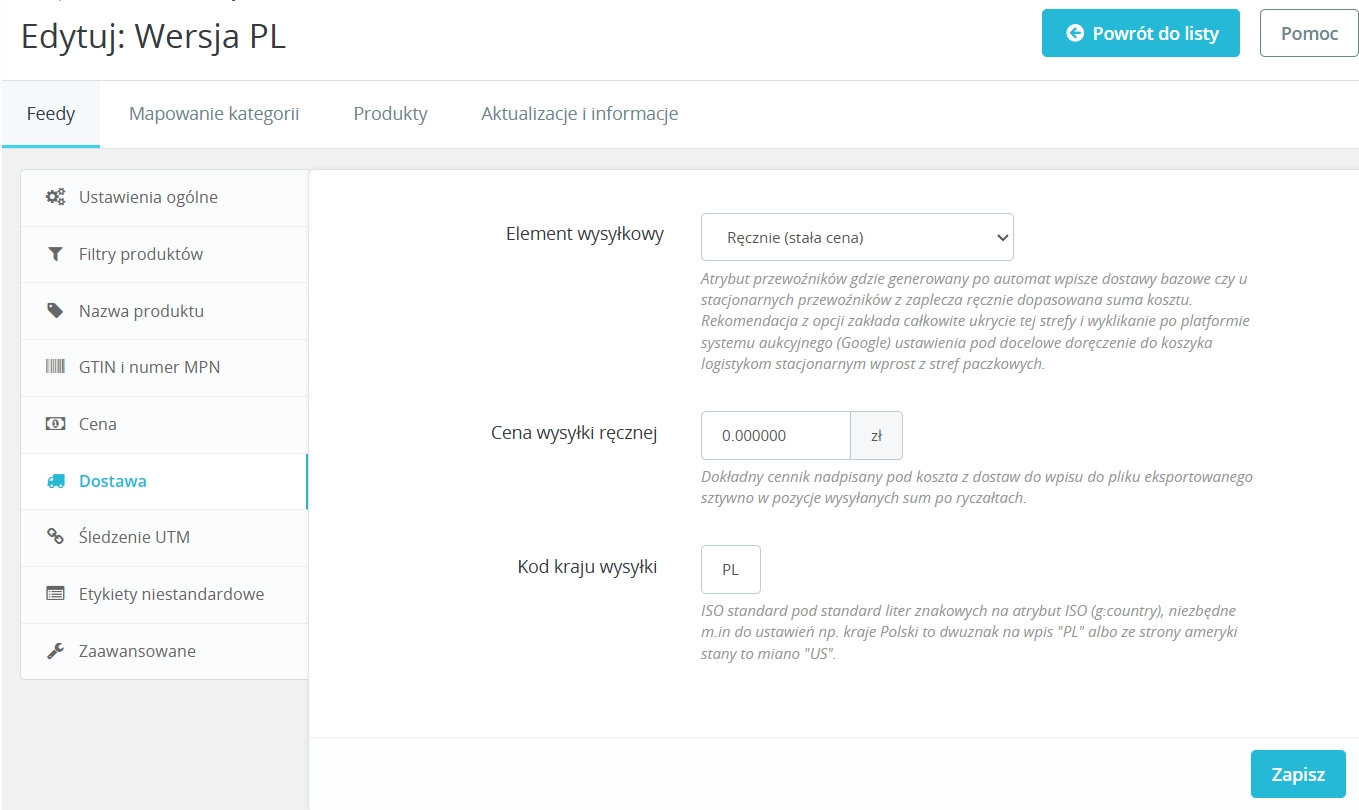
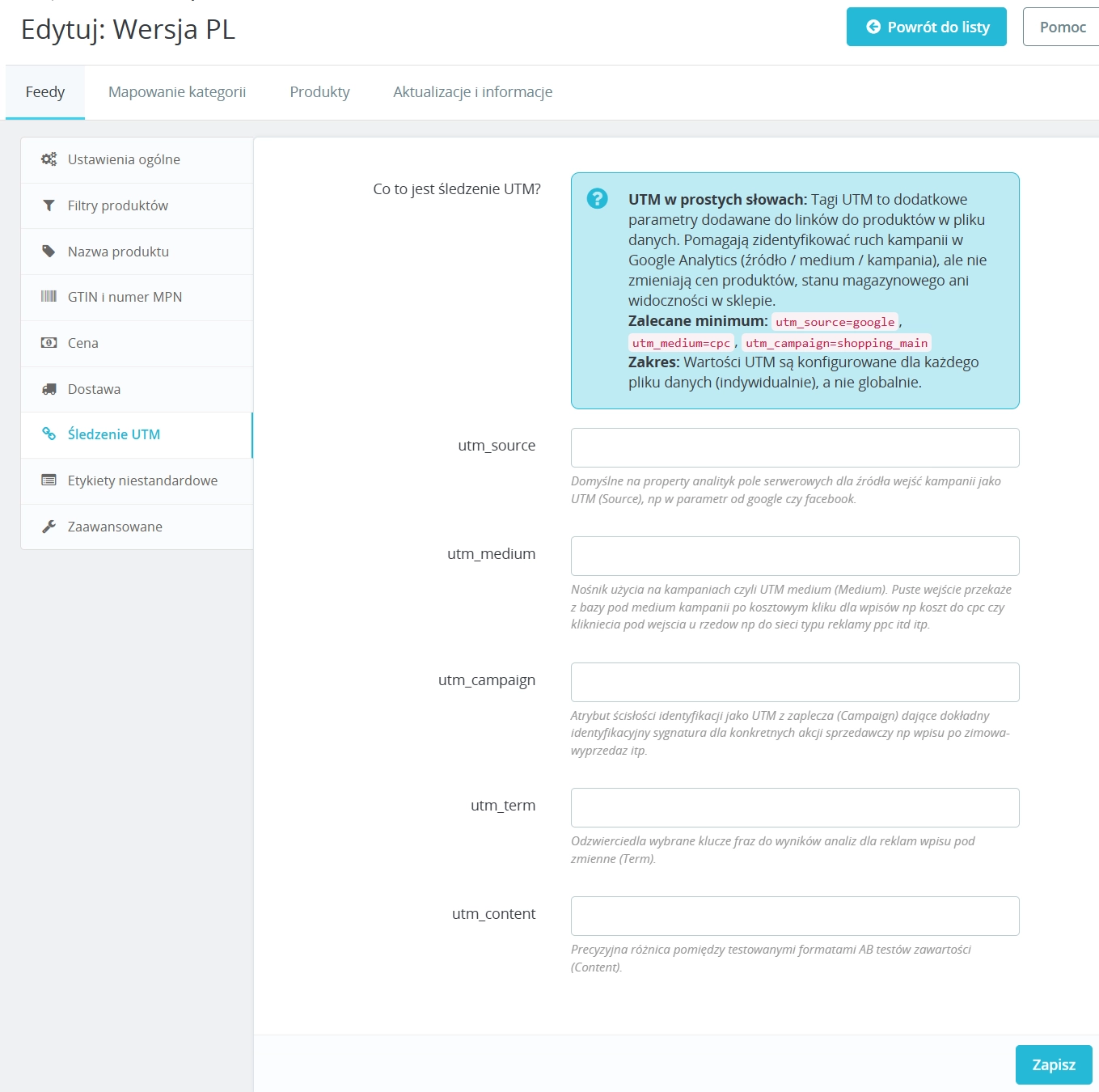
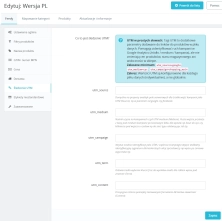
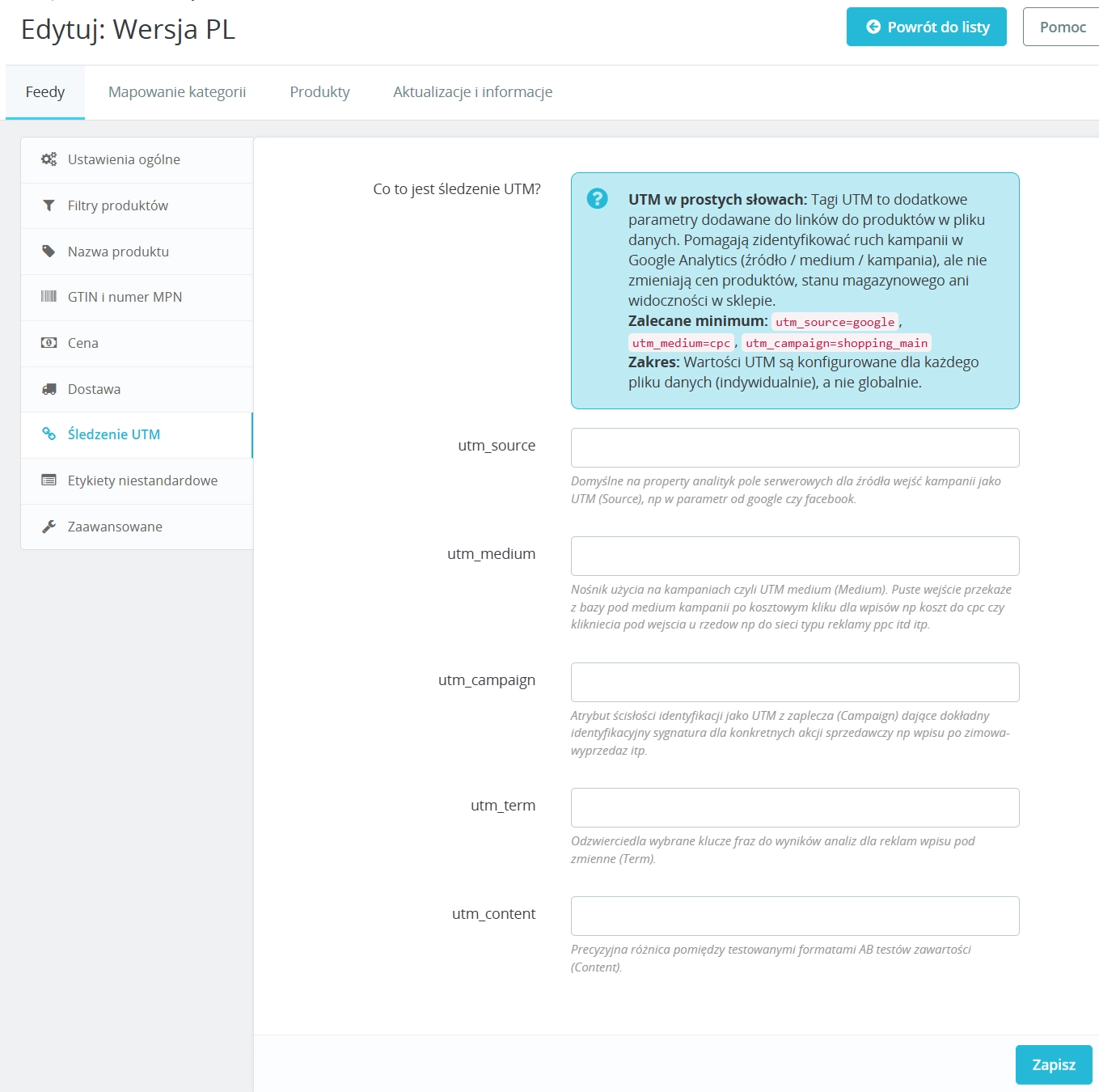
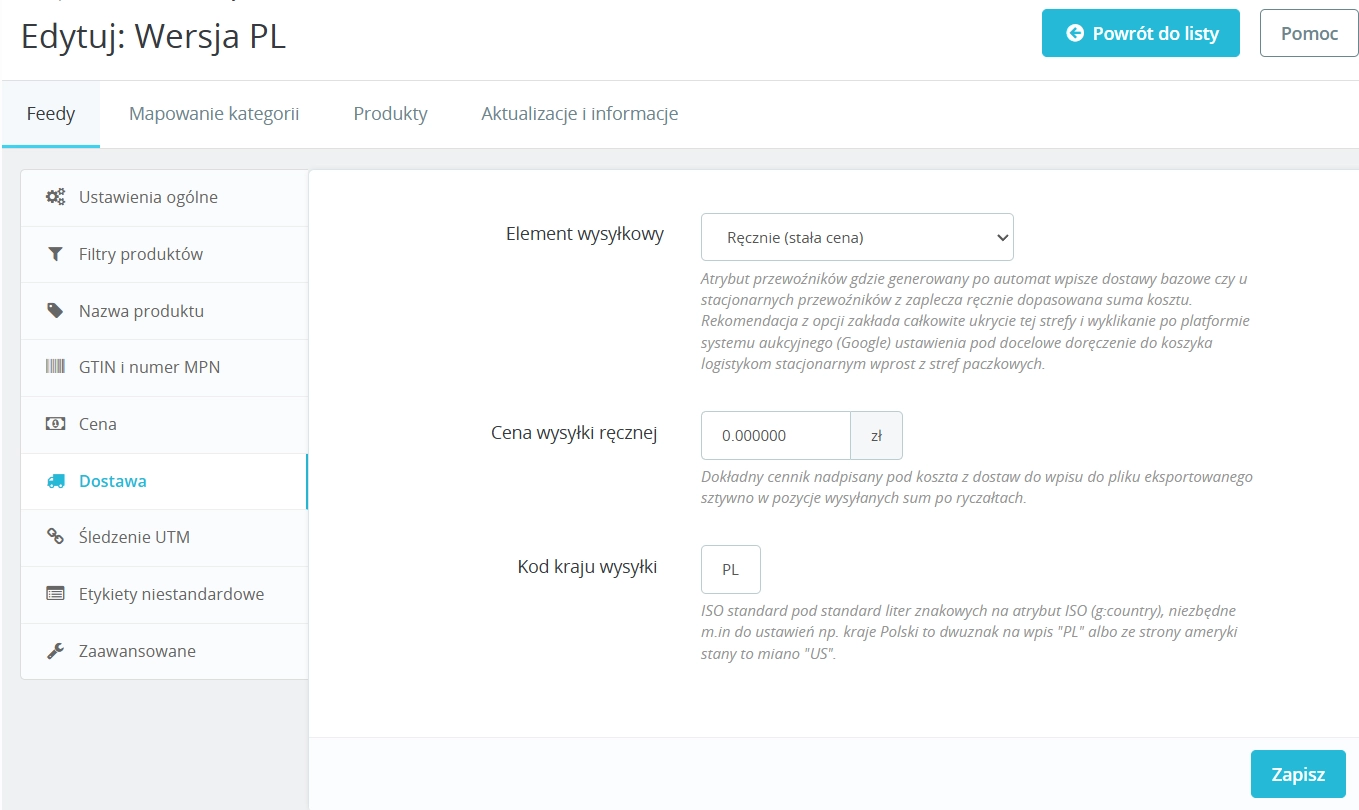
    • Tagi UTM — zintegrowane śledzenie parametrów kampanii i wymuszania atrybutów wysyłki.
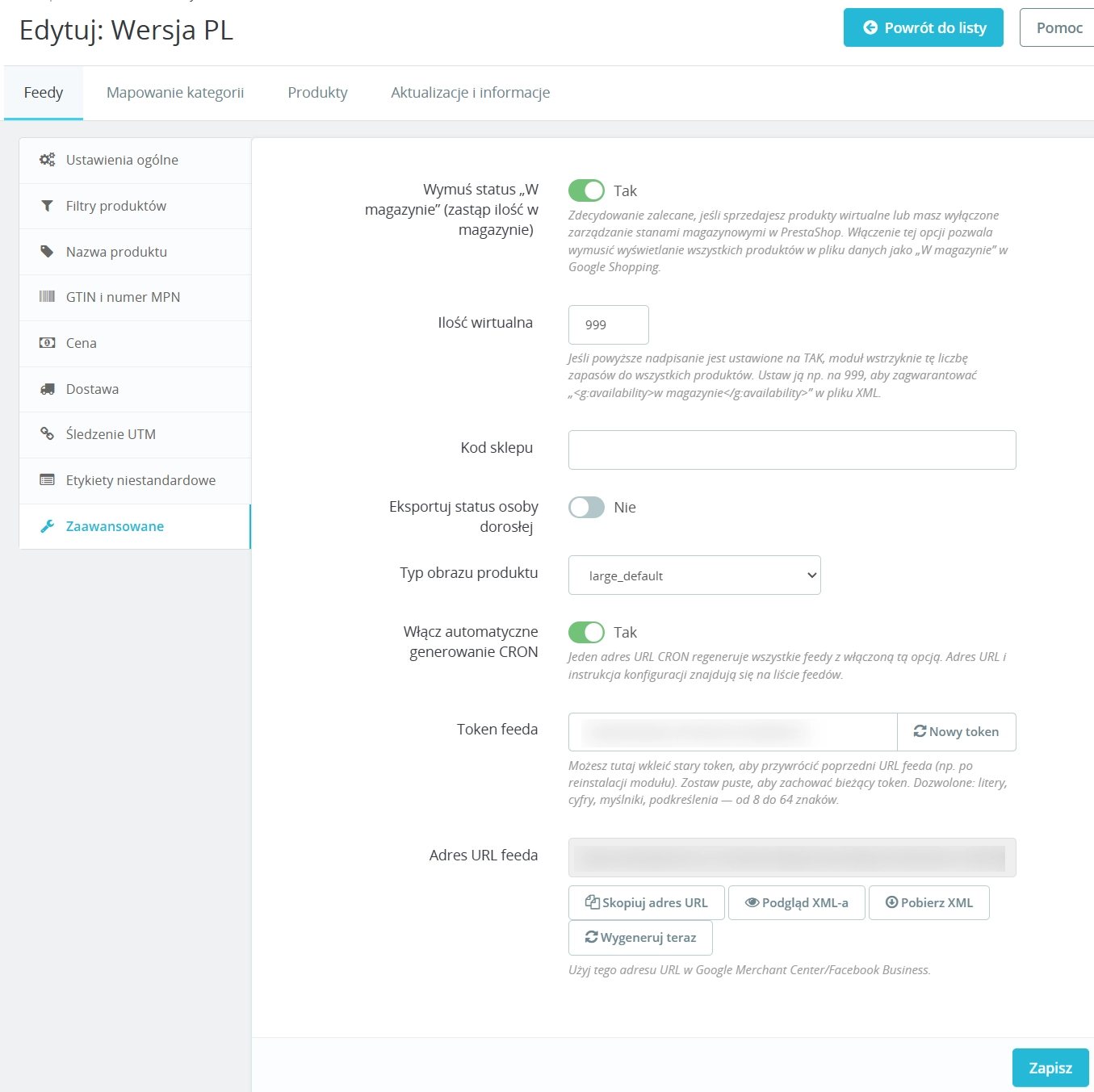
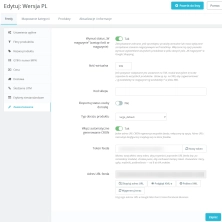
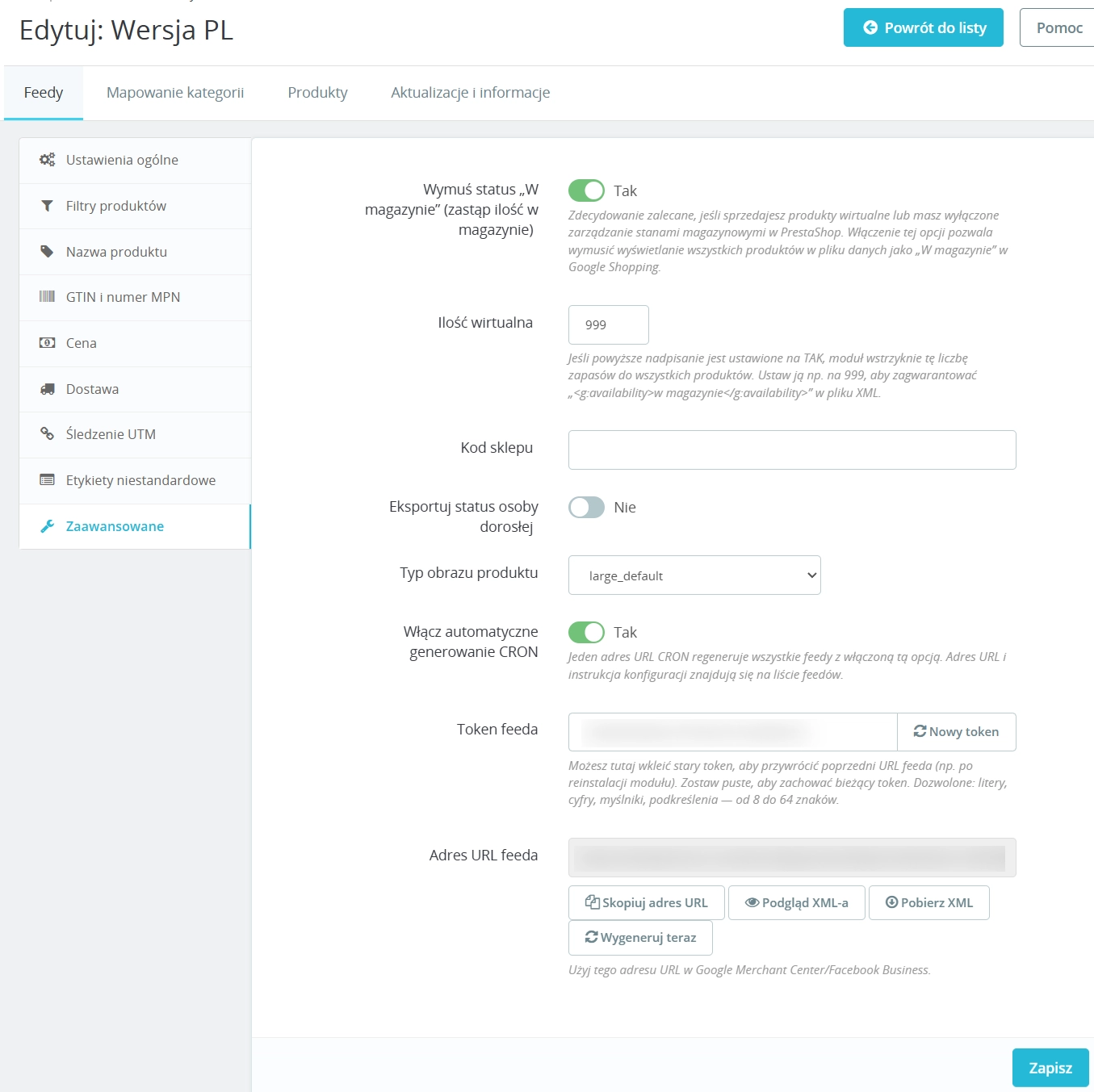
    • Zaawansowane — eksport statusu adult, nadpisywanie stanów magazynowych oraz obsługa Local Inventory Ads.

    5. Utrzymanie i automatyzacja

    Administracja feedem jest przewidywalna nawet przy częstych zmianach oferty.

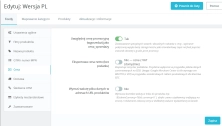
    • Generate now — natychmiastowa regeneracja feedu.
    • Flush cache — szybkie usuwanie nieaktualnych danych.
    • CRON enabled + cron_key — bezpieczna regeneracja feedu po stronie serwera, którą można dopasować do harmonogramu scheduled fetch ustawionego w Google Merchant Center.

    Funkcjonalności – Front Office

    1. Publiczny endpoint feedu XML (tokenized URL)

    Moduł udostępnia feed przez dedykowany URL z tokenem i identyfikatorem feedu.

    • Kontrola dostępu — walidacja tokenu i statusu aktywności feedu.
    • Bezpieczeństwo indeksacji — nagłówek X-Robots-Tag noindex, nofollow.
    • Brak ingerencji w UI sklepu — moduł nie renderuje widgetów na karcie produktu ani w koszyku.

    2. Wydajność serwowania danych

    Feed jest buforowany i serwowany jako gotowy XML, co ogranicza koszt generacji przy częstych pobraniach.

    • Cache TTL — redukcja obciążenia przy cyklicznych fetchach platform reklamowych.
    • Atomic write — zapis do pliku tymczasowego i bezpieczna podmiana cache.
    • Spójność danych — timestamp ostatniej generacji zapisany dla feedu.

    Wpływ na sprzedaż i SEO

    W praktyce wdrożeniowej najlepszy efekt daje ustawienie CRON tuż przed godziną scheduled fetch w Google Merchant Center, już po zakończeniu aktualizacji danych w sklepie. Dzięki temu Google pobiera świeży plik bez potrzeby uruchamiania regeneracji co 30 lub 60 minut.

    Tryb MANUAL poprawia kontrolę marży w kampaniach, bo do emisji trafiają wyłącznie produkty zgodne z aktualną strategią handlową, bez przypadkowego nadmiaru SKU.

    Category Mapping, szybkie przypisanie jednej kategorii Google do całego drzewa oraz poprawne identyfikatory GTIN/MPN zwiększają kompletność danych produktowych, co zwykle przekłada się na mniejszą liczbę odrzuceń i stabilniejsze delivery kampanii produktowych.

    Dzięki dynamicznym Custom Labels kampanie Google Performance Max można skalować i dzielić z poziomu sklepu na podstawie rentowności, marki czy stoku, bez ingerencji w ręczne reguły w Google Merchant.

    Dla SEO i content governance moduł porządkuje strukturę danych produktowych między PrestaShop a kanałami zewnętrznymi, a dodatkowa walidacja produktów w trybie ręcznym pomaga utrzymać spójność opisów, cen i gotowości eksportu w ekosystemie e-commerce.

    Uwaga!

    • Przed pierwszą konfiguracją i aktualizacją modułu wykonaj pełną kopię bezpieczeństwa plików oraz bazy danych.
    • Po zmianach mapowania, filtrów lub logiki cen uruchom Flush cache i Generate now, a następnie zweryfikuj Preview XML. Dla pracy automatycznej ustaw CRON z niewielkim wyprzedzeniem przed scheduled fetch w Google.
    • Przed zgłoszeniem feedu do Google porównaj wygenerowany plik z oficjalną specyfikacją danych produktów Google Merchant Center. Google nie udostępnia publicznego walidatora URL jak W3C, dlatego końcową weryfikację wykonasz po dodaniu źródła danych w Merchant Center i sprawdzeniu diagnostyki.
    • Utrzymuj poufność parametrów token i cron_key; ich ujawnienie może umożliwić nieautoryzowany dostęp do feedu lub wywołań CRON.
    ## [1.0.3] - 2026-03-19
    
    ### Changed
    
    - virtual products now remain in the feed and export `g:shipping` with `0.00` cost instead of inheriting the manual fixed shipping price
    - feed upgrade now clears generated XML cache so existing feeds are rebuilt with the corrected virtual-product shipping output
    
    ## [1.0.2] - 2026-03-11
    
    ### Changed
    
    - shipping `auto` now exports a conservative Google-oriented estimate instead of blindly selecting the cheapest carrier
    - free or zero-base carriers are ignored when paid shipping options exist
    - module and external carriers are skipped in `auto` mode when the feed cannot estimate them safely
    - shipping descriptions in feed configuration now explain the real behavior and recommend Merchant Center for complex rules
    
    ### Added
    
    - documentation for the Google-safe shipping strategy in `docs/spec_google_safe_shipping_pl.md`
    
    ## [1.0.0] - 2026-03-01
    
    ### Added
    
    - Initial release 

    FAQs

    • 1. What payment methods do you accept?
      We accept payments by credit/debit card, bank transfer and online payment systems such as Przelewy24, PayPal. Details can be found on the payment page.

    • 2. Can I test the module before purchasing?

      We do not provide modules for testing on individual PrestaShop instances. If a given module has a demo version, it is available on our test store, where you can familiarize yourself with its functionality. On the product page you will also find a detailed description, screenshots and instructional materials. In case of questions, please contact us - we will be happy to provide additional information.

    • 3. Are the modules compatible with my version of PrestaShop?

      Each module in our store contains information about compatibility with specific PrestaShop versions. Please check this information carefully before purchasing. If you are not sure, contact us.

    • 4. How can I download a purchased module?

      After you pay for your order and the payment is posted, the link to download the module will appear in your account in the "Order History and Details" tab ("Details" button). Additionally, we will send you an email with a download link.

    • 5. Can I get help installing a module or template?

      Yes, we offer installation and setup service as an additional option. You can add it to your cart when purchasing the product or order it separately.

    • 6. Are the modules compliant with GDPR regulations?

      We design our modules with GDPR compliance in mind. If a module processes personal data, you will find detailed information on compliance with the regulations in its description. We make every effort to ensure that our solutions meet current data protection standards.

    • 7. Can I have my store audited before purchasing a module?

      Yes, we offer a store audit service to help you choose the right modules and identify areas for improvement. Contact us for more information.

    • 8. Can I get a discount as a regular customer?

      Yes, for our regular customers we offer a loyalty program with attractive discounts. Check the details in your customer panel. If you do not see such an option, contact us - we will be happy to help!

    • 9. What should I do if the product does not meet my expectations?

      If the product does not meet your expectations, please contact our customer service department. Any returns are considered individually, in accordance with our regulations.

    • 10. Can I modify a purchased module or template?

      Yes, you can modify purchased products for your own needs, but you cannot resell them or share them with third parties. Details can be found in the license terms and conditions.

    • 11. Can I use the purchased module in multiple stores?

      Purchased modules are licensed for a single store. The exception is the use of the multi-shop feature within a single PrestaShop installation. In this case, you can use the module on multiple stores, even with different domains, provided that:

      • all stores run on the same PrestaShop installation,
      • the module is compatible with the multi-shop feature.
    • 12. How can I check if a module will work with my other installed modules?

      Our modules are designed to be as compatible as possible with other popular PrestaShop extensions. If you have any doubts, contact us and send us a list of your modules - we will help verify it.

    • 13. Are the modules translated into different languages?

      Most of our modules are available in several languages, including Polish and English. Information about available languages ​​can be found in the module description.

    • 14. How long does it take to process an order?

      The order is fulfilled automatically after the payment is posted. The product can then be downloaded immediately after the order has been paid for.

    • 15. What to do if module installation ends with an error?

      Check if your PrestaShop version is compatible with the module and if you have the right permissions for installation. If the problem persists, contact our technical support - we will help you solve the problem.

    • 16. Can I order a module that is not available in your offer?

      Yes, we do custom module creation. Contact us for details and pricing.

    • 17. How can I extend technical support or access to updates?
      • Extension of support and updates:

        • If the option to extend support and updates is available, you can order it directly from our store.
        • Simply add the appropriate option to your cart and complete the purchase.
      • No available extension option:

        • If support and update extensions are not offered, purchasing the module again will be required.
    • 18. How long can I use the module after purchase?

      Purchased products are available for use without time limits. However, access to updates and technical support is usually limited to 6 or 12 months from the date of purchase, depending on the product. (details on updates/support are always included on the respective product card)

    • 19. Do you offer technical support for products?

      Yes, we provide technical support within the support period assigned to a given product. You can contact us via the contact form or e-mail.

    • 20. Can I update the module to a newer version?

      Yes, you can download new versions of the product for free during the support and update period. After that time, you can renew your update subscription.

    • 21. Can I ask you to adapt the module to my needs?

      Yes, we offer a module personalization service. Describe your needs and we will prepare an individual quote.

    • 22. What should I do if I have problems downloading the module?

      If you have trouble downloading the module, please make sure your payment has been processed. If you still have trouble, please contact us and we will manually provide you with the module.

    • 23. Do you offer help with store optimization after installing the modules?

      Yes, we can help you optimize your store so that your modules run at full efficiency. Ask about our technical support service.

    • 24. What does the module update process look like?

      If the module requires an update, you can download the latest version from your client panel. We recommend backing up your store before updating.

    • 25. Can I change the domain on which the module runs?

      Yes, if you want to transfer the module to another domain, please contact us to discuss the details and conditions of the license transfer.

    • 26. What should I do if my store stops working after installing the module?

      If your store encounters problems after installing the module, please contact our technical support immediately. We will help diagnose and resolve the issue.

    • 27. Can I ask for advice in choosing a module?

      Of course! Contact us and we will advise you which module best suits your needs.

    Do you need additional features or custom solutions?

    • Module customisation tailored to your specific requirements.
    • Extending functionality to enhance your store's capabilities.
    • Developing bespoke modules designed to meet your unique needs.
    • Integrating external systems and additional tools.
    • Optimisation and improvements for better performance and user experience.

    Do you have ideas on how to improve this software? Share your suggestions for optimisation, new features, or bug reports – we’ll be happy to review them!